The Land RegisterWhat It Contains and Why It Matters So Much When Buying Property
Anyone who buys a property also buys its history in the land register (Grundbuch): owners, third-party rights, debts. The land register enjoys public faith – what is recorded there is, in principle, deemed to be correct. That is why looking at it is a must before every purchase.
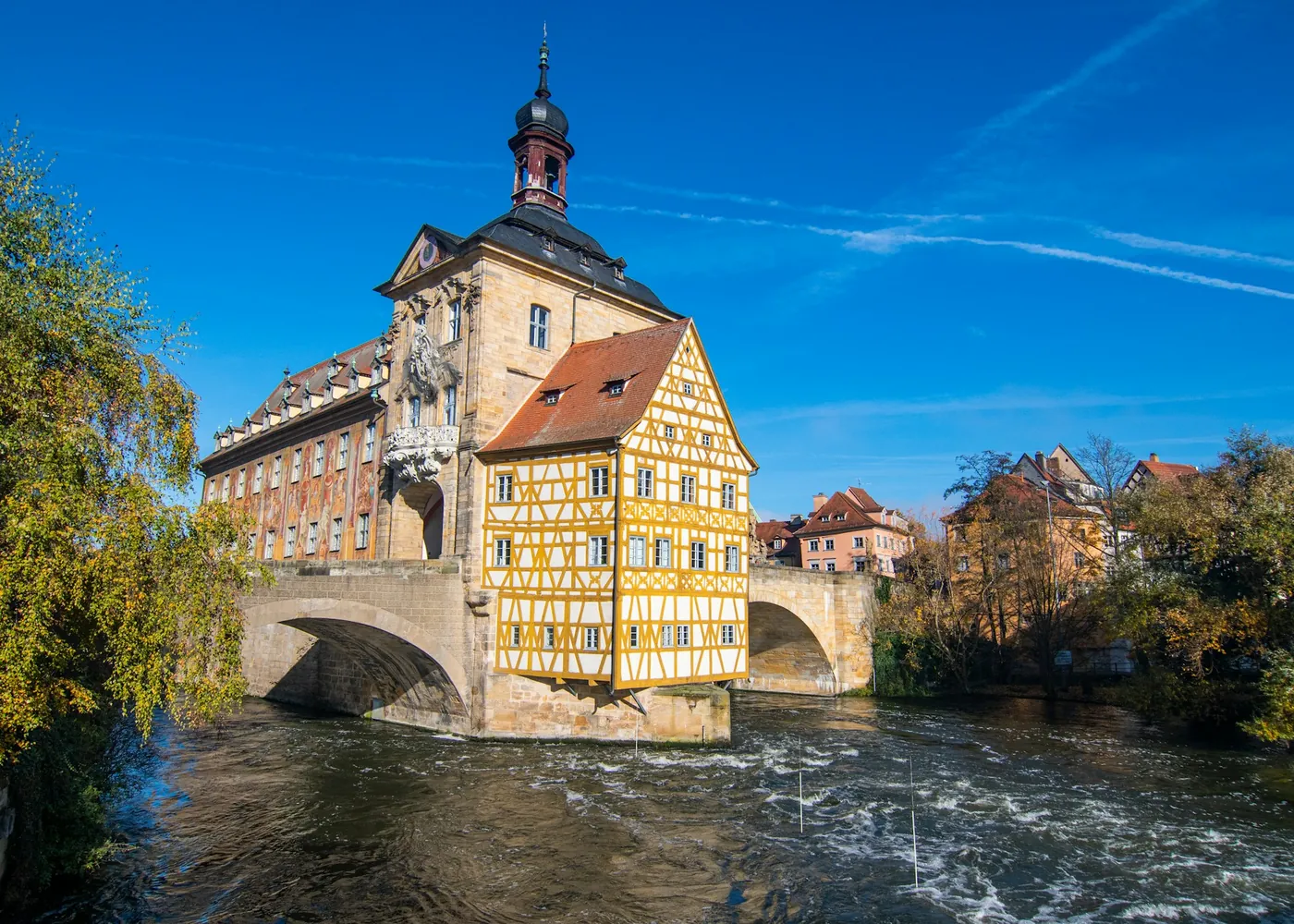
This guide in one minute
The key points of this guide as a short video. All details and worked examples are in the text below.
No narration, background music only.
Inhalt dieser Seite (15)
- Who keeps the land register?
- The structure of the land register
- What buyers should look out for
- The priority notice of conveyance
- The transfer of ownership
- Who may look at the land register?
- How to read a land register extract: an example
- Typical entries in Section II
- Rank: who comes first
- Land register, cadastre and building encumbrances – the difference
- Correcting the land register after a death
- Problems that show up in the land register – and solutions
- Condominium land register and hereditary building land register
- Land charges on purchase: how they are cancelled or taken over
- Typical questions when inspecting the land register
Currently for sale: See 4 plots from €38,000
Key points at a glance
- The land register is a public register kept at the local court; it records the ownership of and encumbrances on a plot.
- Section I names the owner, Section II encumbrances and restrictions (e.g. right of way, right of residence), Section III land charges and mortgages.
- The priority notice of conveyance protects the buyer between the notary appointment and the transfer of ownership.
- The buyer only becomes the owner when entered in Section I – not when signing at the notary.
- Only those who demonstrate a legitimate interest can obtain a land register extract.
Who keeps the land register?
The land register is kept at the land registry (Grundbuchamt) of the competent local court (Amtsgericht). In Oberfranken, these include the local courts in Hof, Bayreuth, Bamberg, Coburg, Kulmbach, Kronach, Lichtenfels and Wunsiedel. Today the land register is kept electronically.
The structure of the land register
Heading (Aufschrift): Local court, land register district, folio number.
Inventory (Bestandsverzeichnis): Description of the plot – cadastral district, parcel area, parcel number, type of use, location and size. For condominiums, this also shows the co-ownership share, combined with separate ownership of a particular flat.
Section I (Abteilung I) – Owner: Who the owner is and on what basis (e.g. conveyance, succession).
Section II (Abteilung II) – Encumbrances and restrictions: Easements (right of way, utility easement), rights of residence, usufruct, pre-emption rights, real burdens, hereditary building rights, priority notices of conveyance, foreclosure notes.
Section III (Abteilung III) – Charges on land: Land charges (Grundschulden) and mortgages (Hypotheken), i.e. the banks' security.
What buyers should look out for
- Is the seller the same person as the owner? With inheritances, the deceased is often still registered; in that case a certificate of inheritance (Erbschein) or a notarised will is needed.
- Read Section II carefully: A lifelong right of residence or usufruct can reduce the value considerably. Rights of way and utility easements restrict use.
- Section III: Existing land charges are usually redeemed from the purchase price and cancelled. The notary arranges this in the purchase contract.
The priority notice of conveyance
Between the notary appointment and the transfer of ownership, several weeks to months often pass. During this time, the priority notice of conveyance (Auflassungsvormerkung) protects the buyer: it is entered in Section II shortly after notarisation and prevents the seller from selling or encumbering the plot elsewhere. The purchase price only becomes due once the priority notice has been registered.
The transfer of ownership
Requirements for the transfer to the buyer:
- The purchase price has been paid in full (the seller confirms receipt).
- The land transfer tax (Grunderwerbsteuer) has been paid; the tax office has issued the clearance certificate (Unbedenklichkeitsbescheinigung).
- Any necessary approvals and waivers of pre-emption rights are in place.
The notary then applies for the entry. In Bavaria, depending on the land registry, it usually takes two to eight weeks.
Who may look at the land register?
Inspection is only granted to those who demonstrate a legitimate interest (§ 12 GBO) – such as owners, banks, notaries or serious prospective buyers with the owner's authorisation. A simple land register extract costs €10, a certified one €20. Estate agents usually provide it with the exposé or before the notary appointment.
How to read a land register extract: an example
A simplified extract for a detached house in Kronach might look like this:
| Part | Entry (example) | What it means |
|---|---|---|
| Inventory | Cadastral district Kronach, parcel 1234/5, building and open space, Rosenweg 7, 640 m² | the plot with its location and size |
| Section I | Maria Muster, born 1956; conveyed on 12 March 1988, registered on 30 May 1988 | current owner and basis of acquisition |
| Section II, no. 1 | Right of way on foot and by vehicle for the respective owner of parcel 1234/6 | the neighbour may drive over the driveway |
| Section II, no. 2 | Utility easement for Stadtwerke Kronach | a supply line may not be built over |
| Section III, no. 1 | Uncertificated land charge of €120,000 in favour of the Sparkasse | security for an old loan, cancelled on sale |
A right of way on foot and by vehicle usually only reduces the value slightly, whereas a utility easement running right across the garden can prevent extension plans. Have unclear entries explained to you before the purchase – the notary can request the underlying approvals from the land register files.
Typical entries in Section II
| Entry | Content | Effect on value |
|---|---|---|
| Right of way (Wegerecht / Geh- und Fahrtrecht) | Third parties may cross the plot | low to medium |
| Utility easement (Leitungsrecht) | Lines for electricity, gas, water, sewers | low, but building restricted |
| Right of residence (Wohnrecht, § 1093 BGB) | A person may live in rooms for life | high – often a significant discount |
| Usufruct (Nießbrauch, § 1030 BGB) | The beneficiary may use the property and collect rents | very high |
| Pre-emption right (Vorkaufsrecht) | The beneficiary can step in on a sale | medium – delays the sale |
| Real burden (Reallast) | Recurring payments, e.g. an annuity | depending on the amount |
| Hereditary building right (Erbbaurecht) | Building on someone else's land | separate valuation model |
| Foreclosure note (Zwangsversteigerungsvermerk) | Proceedings are pending | sale only with the creditors' consent |
More on the most important rights: Usufruct and right of residence, Pre-emption right and Hereditary building right.
Rank: who comes first
The order of the entries in Sections II and III determines their rank. In a foreclosure auction, rights are satisfied in this order – lower-ranking rights may lapse. That is why banks usually require first rank for their land charge. If a right of residence is already registered there, the bank often requires the beneficiary to subordinate their rank before it finances the purchase. This can considerably delay a sale if the beneficiary does not cooperate.
Land register, cadastre and building encumbrances – the difference
The land register answers the question of who owns a plot and what rights exist over it. The real estate cadastre (Liegenschaftskataster) at the Office for Digitisation, Broadband and Surveying, on the other hand, describes where the plot is located and what shape it has – the cadastral map (Flurkarte) comes from there.
A special feature in Bavaria: there is no register of building encumbrances (Baulastenverzeichnis). What is registered in other federal states as a public-law building encumbrance (such as a setback area on the neighbouring plot) is usually secured in Bavaria by an easement in the land register. For purchases in Oberfranken, a careful look at Section II is therefore sufficient – supplemented by an enquiry at the building authority as to whether all buildings have been approved.
Correcting the land register after a death
When the owner dies, the land register becomes inaccurate: the heirs are the owners, but are not yet registered. Correcting the land register (Grundbuchberichtigung) is free of charge within two years of the death if it is applied for at the land registry. A certificate of inheritance or a notarised will with the record of its opening is required. If the heirs want to sell anyway, the notary can also organise the correction and the sale in one step. More on this in the guide Inheritance.
Problems that show up in the land register – and solutions
- Old land charges for loans repaid long ago: Request a cancellation approval from the bank – possible even decades later. If the bank no longer exists, its legal successor can help.
- Rights of residence of deceased persons: The entry can be cancelled with a death certificate.
- Several owners, one unreachable: No sale without all owners. In an emergency, the only option is court proceedings.
- Area discrepancies: If the actual use does not match the cadastre, a survey provides clarity.
We check the land register extract for every assignment before marketing, so that such points do not first come to light at the notary – more under Notary preparation.
Condominium land register and hereditary building land register
In addition to the normal land register, there are special forms:
- Condominium land register (Wohnungsgrundbuch): A separate land register folio is created for each flat. The inventory shows the co-ownership share in the plot, combined with separate ownership of the flat. The reference to the declaration of division (Teilungserklärung), which governs rights and obligations, is important. → Flats, owners' association and service charge
- Partial ownership land register (Teileigentumsgrundbuch): like the condominium land register, but for premises not used for residential purposes – such as shops, offices or garages.
- Hereditary building land register (Erbbaugrundbuch): A separate land register is created for a hereditary building right, which also records the ground rent (Erbbauzins) as a real burden. → Hereditary building right
Land charges on purchase: how they are cancelled or taken over
On a sale, the seller's land charges are usually still registered. The usual process:
- The notary requests the cancellation approval from the seller's bank, together with a redemption amount.
- In the notice that payment is due, the notary informs the buyer which part of the purchase price goes directly to the seller's bank.
- After payment, the land charge is cancelled and the remainder goes to the seller.
Sometimes it makes sense not to cancel an existing land charge but to assign it to the buyer's bank – this saves notary and land register costs. The notary clarifies with both banks whether this is possible.
Typical questions when inspecting the land register
| Question | Where to find the answer |
|---|---|
| Who owns the plot? | Section I |
| How big is the plot? | Inventory |
| May the neighbour drive across my plot? | Section II |
| Is there a right of residence or usufruct? | Section II |
| Which loans are secured? | Section III |
| Is a foreclosure auction under way? | Section II (note) |
| Which documents are the entries based on? | Land register file at the land registry |
More on checks before buying under Checklist for buyers.
Frequently asked questions
What is the land register file?
The land register file (Grundakte) contains the deeds on which the entries in the land register are based – such as purchase contracts, approvals for rights of way or the declaration of division. Anyone with a legitimate interest can inspect it. Notaries request relevant documents from it as needed.
Can an entry in the land register be wrong?
Yes, for example after a death, if the deceased is still registered. In that case the land register must be corrected. Although the land register enjoys public faith, errors can be corrected on application with the necessary evidence.
Can I view the land register online?
Private individuals cannot freely access the land register online. Owners apply for an extract at the competent land registry (in writing or in person) or through a notary, who has access to the electronic land register.
Must a prospective buyer be allowed to see the land register extract?
A serious prospective buyer has a legitimate interest as soon as contract negotiations become concrete. In practice, the seller or the estate agent provides the extract. Both sides receive the land register details with the draft purchase contract at the latest.
How long does registration in the land register take?
The priority notice of conveyance is usually registered within a few days to two weeks. The final transfer of ownership follows after payment of the purchase price and the clearance certificate – often two to three months after the notary appointment in total.
How much does registration in the land register cost?
The costs depend on the purchase price (GNotKG) and, together with the notary's fees, amount to about 1.5 to 2% of the purchase price. The land register costs alone are usually around 0.5%.
What happens to a land charge that has been paid off?
A land charge remains in the land register even after the loan has been repaid, until it is cancelled. Cancellation requires a cancellation approval from the bank and a notarially certified application by the owner.
Sources & further reading
- justiz.bayern.de – Land registries in Bavaria
- bnotk.de – Federal Chamber of Notaries
- gesetze-im-internet.de – § 12 GBO: inspection of the land register
- gesetze-im-internet.de – § 883 BGB: priority notice
- ldbv.bayern.de – Bavarian State Office for Digitisation, Broadband and Surveying: real estate cadastre and cadastral maps
- gesetze-im-internet.de – GNotKG: fees for land register entries
Unsure about a term? Property glossary · FAQ
Matching listings
What is your property worth today?
A market-based valuation using real comparable sales from Upper Franconia – free, without obligation, usually within 48 hours.
- One personal contact for all of Upper Franconia
- Reply usually within 24 hours