Heritable building rightsa house on someone else's land
A heritable building right (Erbbaurecht) – often colloquially called "Erbpacht", and comparable to a long leasehold – makes it possible to build or buy a house without buying the land. In Upper Franconia, heritable building rights are common mainly on church and municipal land. They can be a good solution, but they have special features that buyers need to know about.
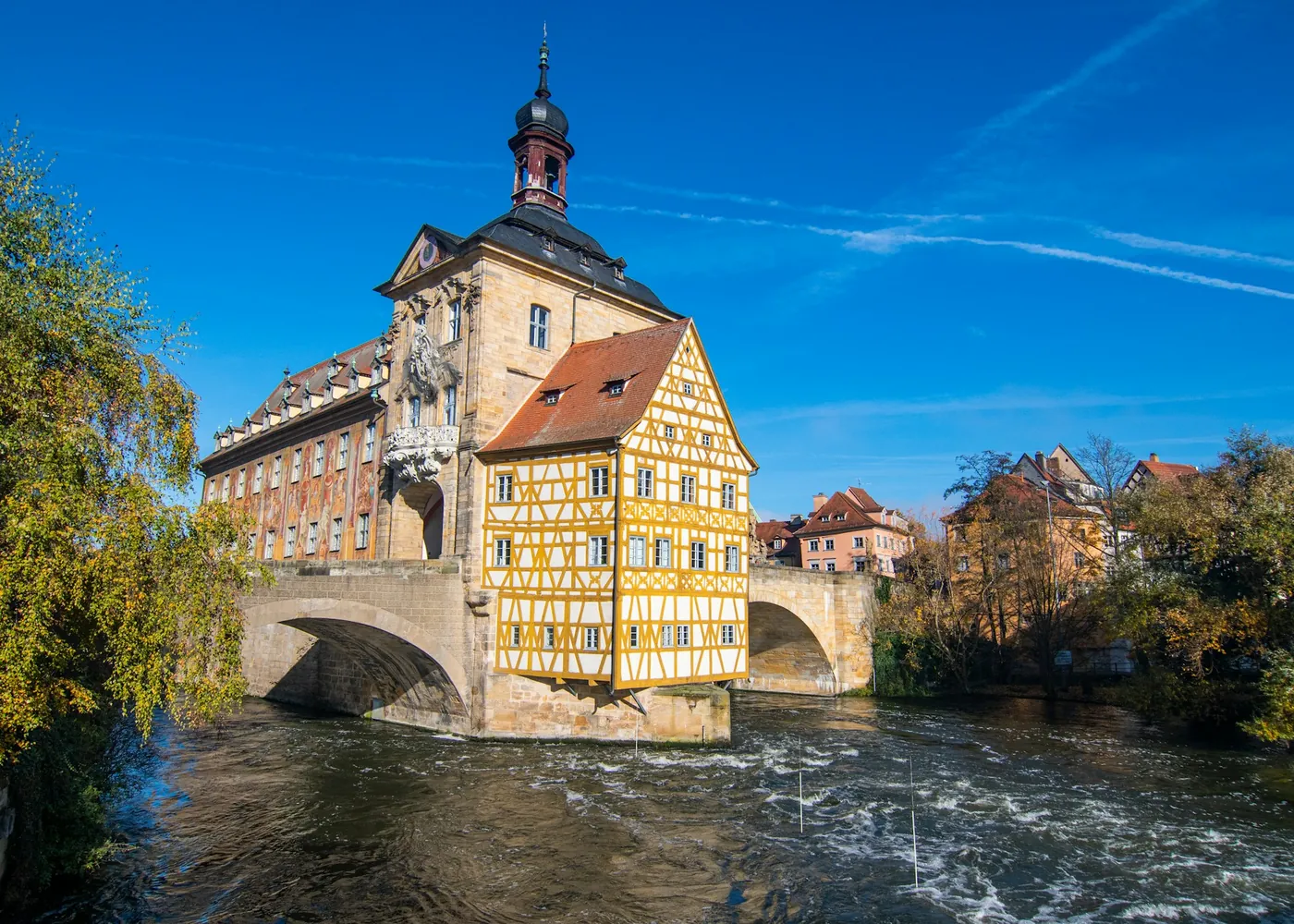
This guide in one minute
The key points of this guide as a short video. All details and worked examples are in the text below.
No narration, background music only.
Inhalt dieser Seite (15)
- How a heritable building right works
- Ground rent and adjustment
- Term, reversion and compensation
- Advantages
- Disadvantages and risks
- What buyers should look out for
- Buy the land or take a leasehold? A comparison over 30 years
- How a heritable building right is valued
- Financing a heritable building right
- Selling a heritable building right
- For landowners: a heritable building right instead of a sale?
- Heritable building rights in Upper Franconia
- The end of the term: what happens?
- Checklist before buying a heritable building right
- Heritable building rights and owner-occupied flats
Currently for sale: See 4 plots from €38,000
Key points at a glance
- With a heritable building right (Erbbaurecht), you only buy the building or the right to build on someone else's land – the land itself remains owned by the grantor.
- In return, the leaseholder pays an annual ground rent (Erbbauzins), usually 3–5% of the land value.
- Typical terms are 60 to 99 years; after that, the building passes to the landowner in return for compensation.
- Leaseholds are cheaper to acquire, but lose value as the remaining term shrinks and are harder to finance.
- Common grantors are churches, foundations and municipalities.
How a heritable building right works
The landowner (the grantor, Erbbaurechtsgeber) grants the leaseholder (Erbbauberechtigter) the right to have a building on their land. The heritable building right is entered in its own leasehold land register (Erbbaugrundbuch) and can be sold, inherited and encumbered with land charges – almost like a plot of land.
The building belongs to the leaseholder, the land to the grantor. For its use, the leaseholder pays a ground rent (Erbbauzins).
Ground rent and adjustment
The ground rent is usually 3 to 5% of the land value per year, and sometimes less for families on church and municipal land. Most contracts contain a value-protection clause (Wertsicherungsklausel) that links the rent to the consumer price index. For residential buildings, increases are limited by law (§ 9a ErbbauRG): at most every three years and no more than the general development of incomes.
Example: A 600 m² plot with a land value of €120/m² = €72,000. At a ground rent of 4%, you pay €2,880 a year, i.e. €240 a month.
Term, reversion and compensation
Heritable building rights usually run for 60 to 99 years. If the right ends because the term expires, the building passes to the landowner, who must pay compensation – for residential buildings for low-income families, at least two thirds of the value of the building. The right is often extended.
Reversion (Heimfall) is something different: in the event of serious breaches of contract – e.g. ground rent arrears over several years – the landowner can demand the transfer of the heritable building right, again in return for compensation.
Advantages
- Much lower capital requirement, because the land is not bought
- Lower land transfer tax (Grunderwerbsteuer), based on the capitalised ground rent and the value of the building
- Access to plots that would otherwise not be sold (churches, foundations, municipalities)
Disadvantages and risks
- Ongoing ground rent that can rise with inflation
- Loss of value as the remaining term shrinks, especially below 40 years
- Banks are more cautious about lending and often require a remaining term well beyond the loan term
- Consent requirements: sale and encumbrance often require the grantor's consent
- The leaseholder does not benefit from any increase in the value of the land
What buyers should look out for
- Remaining term and extension options
- Level of the ground rent and how it is adjusted
- Consent requirements for sale, letting and encumbrance
- Compensation rules on expiry and reversion
- Option to buy the land – some grantors offer this
Buy the land or take a leasehold? A comparison over 30 years
Whether a heritable building right is worthwhile only becomes clear when you look at the whole holding period. Example: a plot in Bayreuth, 550 m², land value €180/m², i.e. €99,000. Same house, two options:
| Buying the land | Heritable building right (4% ground rent) | |
|---|---|---|
| Capital needed for the land | €99,000 plus approx. €6,000 in ancillary costs | €0 |
| Interest costs when financing the land (3.8%, 30 years, annuity loan) | approx. €67,000 | – |
| Ground rent over 30 years (starting at €3,960/year, +1.5% per year) | – | approx. €149,000 |
| Ownership of the land after 30 years | yes | no |
| Development of the land value | you benefit | you don't benefit |
In this example, the heritable building right is more expensive over 30 years – and at the end the land does not belong to you. It can still be a good choice if you don't have the equity, if the ground rent is well below 4% (for instance with church programmes for families), or if there are simply no plots for sale in the location you want. Always work through your specific case with current interest rates; the Financing guide can help.
How a heritable building right is valued
Put simply, the value of a heritable building right is the value of the building plus a land value share. This share is positive if the agreed ground rent is below the market rate – the leaseholder then pays "too little" for the land and has an economic advantage. If the ground rent is above the market rate, the share becomes negative.
The shorter the remaining term, the more the value falls, because the building will foreseeably pass to the landowner. From around 40 years of remaining term, buyers notice this clearly; below 30 years, financing becomes difficult. For some regions, the local valuation committees (Gutachterausschüsse) publish their own market adjustment factors for heritable building rights. General information on valuation can be found in our guide Determining the value of a property.
Financing a heritable building right
Banks do finance heritable building rights, but check them more closely:
- Remaining term: It should exceed the loan term by at least 10 to 20 years.
- Ranking: The ground rent is usually entered as a charge on land (Reallast) in the leasehold land register. Many banks require the charge to survive a forced sale ("versteigerungsfest") or to rank behind the land charge (Grundschuld).
- Consent: The land charge often requires the landowner's consent. Churches and municipalities have established procedures for this, but they can take a few weeks.
- Lending value: It is lower than with freehold ownership, because the land does not serve as security.
So allow more time between the decision to buy and the notary appointment. We help with the coordination – see Financing.
Selling a heritable building right
The sale works in principle like that of any property, with three special features:
- Obtain the grantor's consent – it may only be refused for good cause, but it takes time.
- Enclose the heritable building right contract: buyers and banks want to see the term, rent, adjustment clause and consent requirements.
- Set a realistic price: comparable prices for houses with their own land don't fit. We value heritable building rights using a separate approach.
Sometimes it is worth talking to the landowner before the sale about an extension or buying the land. An extended heritable building right or freehold ownership sells much better. General steps can be found in our guide Selling a property: the process.
For landowners: a heritable building right instead of a sale?
If you own a plot but don't want to sell it – for example out of family tradition – you can grant a heritable building right. Advantages: ongoing income, the land stays in the family, and at the end of the term the building passes back to you in return for compensation. Disadvantages: a long commitment, administrative effort, and the ground rent is taxable income. For undeveloped plots, we are happy to compare both routes – see Selling a plot and Property developers.
Heritable building rights in Upper Franconia
In Upper Franconia, heritable building rights are common mainly where churches, foundations or municipalities own larger areas of land – for example in parts of Bamberg, Bayreuth and Coburg, and in some new development areas of smaller municipalities. Church grantors sometimes offer special terms for families with children, such as a reduced ground rent in the first few years. Municipalities increasingly use heritable building rights to keep land in their ownership while still providing building land.
For buyers, this means: when looking for building plots in your preferred municipality, ask whether heritable building right offers are also available. And with existing houses, check the property brochure carefully for a heritable building right – sometimes it is only mentioned in the small print.
The end of the term: what happens?
| Scenario | Consequence for the leaseholder |
|---|---|
| Extension agreed | The right continues on new terms, usually with an adjusted ground rent |
| The right expires at the end of the term | The building passes to the landowner, with compensation as per the contract (for residential buildings for low-income families, at least two thirds of the value) |
| Purchase of the land | The leaseholder becomes the full owner and the heritable building right is deleted |
| Reversion due to breach of contract | Transfer to the landowner in return for payment |
The closer the end, the more important early negotiation becomes. Anyone who talks about an extension 20 or 30 years before expiry is in a better position than someone who has to negotiate shortly before the end – and can also sell the property more easily until then.
Checklist before buying a heritable building right
- Read the heritable building right contract in full, including all addenda
- Remaining term and extension provisions
- Current ground rent and adjustment mechanism
- Consent requirements for sale, encumbrance, letting and alterations
- Compensation on expiry and reversion
- Option to buy the land
- Ranking of the ground rent in the leasehold land register
- Conversation with the grantor about consent and a possible extension
- The bank's financing commitment for this specific heritable building right
More on general checks in our guide Checklist for buyers.
Heritable building rights and owner-occupied flats
Owner-occupied flats can also stand on leasehold land. This is called a heritable building right for flats (Wohnungserbbaurecht). Each flat owner pays a share of the ground rent, and the owners' association must take care of an extension in good time. Buyers of such flats should carry out the same checks as for houses – plus a look at the declaration of division (Teilungserklärung) and the minutes. → Owner-occupied flats, owners' associations (WEG) and service charges
Frequently asked questions
Can I pass on a heritable building right by inheritance?
Yes. The heritable building right can be inherited and passes to the heirs with all rights and obligations. For inheritance tax, the value of the heritable building right is determined, which is lower than the value of a house with its own land.
Who pays the property tax with a heritable building right?
The leaseholder. For property tax (Grundsteuer) purposes, they are the taxpayer for both the land and the building, because they use the land economically.
Is a heritable building right interesting for investors?
It can be, because the purchase price is lower and the ground rent is deductible as an income-related expense. At the same time, the heritable building right loses value as the remaining term shrinks, and a later sale is more difficult. For long-term investments, the remaining term should be well beyond the planned holding period.
How is land transfer tax calculated for a heritable building right?
When a new heritable building right is created, the ground rent is capitalised over the term, which gives the tax base. When an existing heritable building right with a building is bought, the purchase price and the capitalised ground rent are added together. Overall, the tax is usually lower than when buying a house and land. More under Land transfer tax.
Can I deduct the ground rent from my taxes?
Not if you live in the property yourself. If you let the building, you can claim the ground rent as an income-related expense against your income from letting and leasing.
Is a house with a heritable building right difficult to sell?
Not necessarily, if the remaining term is long and the ground rent moderate. The pool of buyers is smaller, however, and the price is below that of a comparable house with its own land. We value heritable building rights using a special approach that takes the remaining term and the ground rent into account.
Can I buy the land later?
Only if the landowner agrees or the contract provides for an option to buy. Churches and municipalities are not always willing to do this; it is still worth asking.
Sources & further reading
- gesetze-im-internet.de – Heritable Building Rights Act (ErbbauRG)
- gesetze-im-internet.de – § 9a ErbbauRG – limits on ground rent increases for residential buildings
- gesetze-im-internet.de – § 27 ErbbauRG – compensation when the term expires
- erbbaurechtsverband.de – German Heritable Building Rights Association – information for leaseholders and grantors
- destatis.de – Federal Statistical Office – consumer price index for value-protection clauses
Unsure about a term? Property glossary · FAQ
Matching listings
What is your property worth today?
A market-based valuation using real comparable sales from Upper Franconia – free, without obligation, usually within 48 hours.
- One personal contact for all of Upper Franconia
- Reply usually within 24 hours