Living in Upper FranconiaMore Space, More Nature, More Quality of Life
Upper Franconia (Oberfranken) is one of the most underrated regions in Germany. People coming from Munich, Nuremberg or Frankfurt are amazed at property prices that still make a detached house with a garden realistic – in a region with strong employers, universities, World Heritage sites and plenty of nature.
This guide in one minute
The key points of this guide as a short video. All details and worked examples are in the text below.
No narration, background music only.
Inhalt dieser Seite (16)
- The Region at a Glance
- Housing: Ownership Is Within Reach
- Work: Medium-Sized Businesses with World Market Leaders
- Education: Four University Locations
- Leisure and Culture
- Transport and Connections
- Who the Move Is Worthwhile For
- The Towns in Profile
- What Life Costs: a Comparison
- Health and Services
- Working from Home and Internet
- Climate and Seasons
- Moving to Upper Franconia: the Practical Checklist
- Families in Upper Franconia: Nursery, School, Leisure
- Upper Franconia for Investors
- Returners: Back to the Home Region
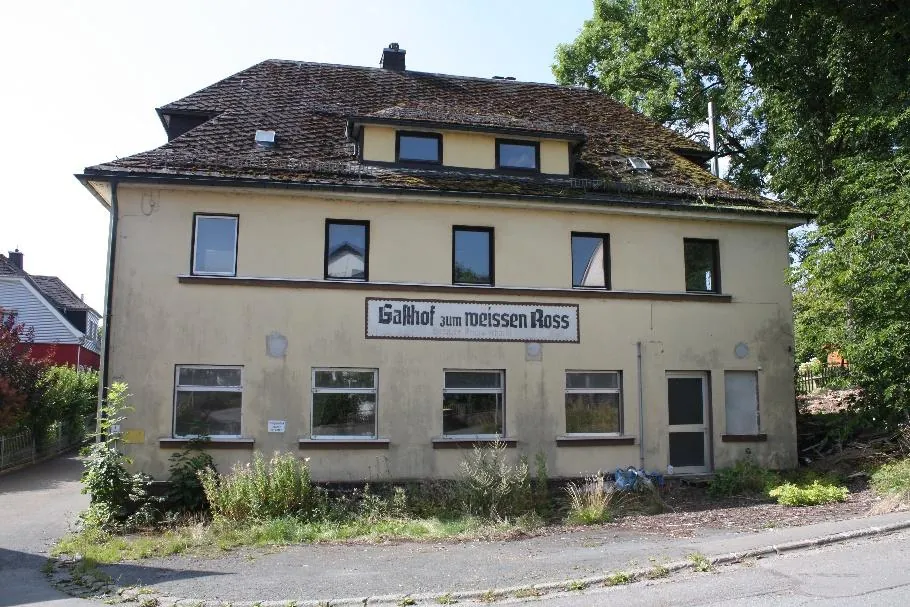
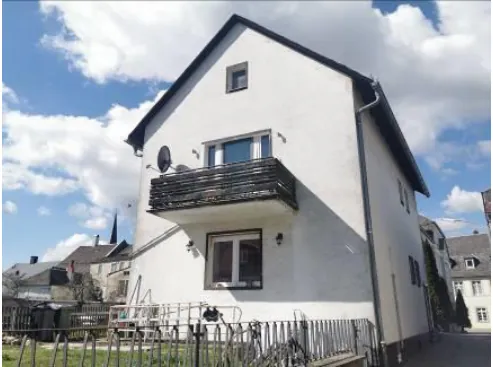
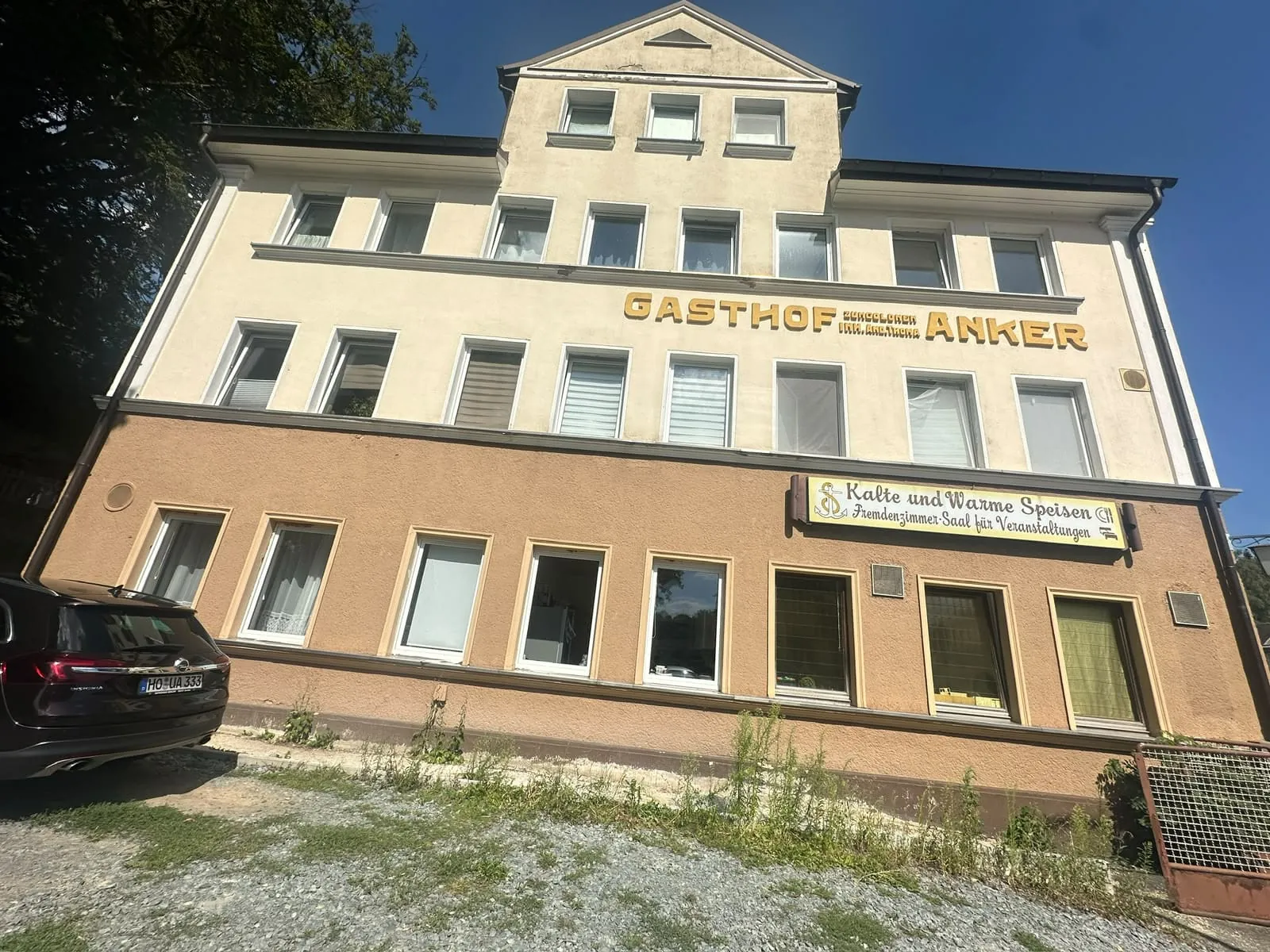
Currently for sale: See 3 houses and buildings from €130,000
Key points at a glance
- Upper Franconia offers property prices well below the Bavarian average – home ownership is still within reach for many families here.
- The region is shaped by medium-sized businesses, industry, healthcare and logistics; skilled workers are in demand.
- Universities in Bayreuth, Bamberg, Coburg and Hof bring young people and innovation.
- The Fichtelgebirge, the Frankenwald and Franconian Switzerland offer nature and leisure right on your doorstep.
- Via the A9, A70, A72 and A93, Nuremberg, Leipzig, Dresden, Prague and Munich are easy to reach.
The Region at a Glance
The administrative region of Upper Franconia in north-eastern Bavaria has around one million inhabitants. It borders Thuringia, Saxony and the Czech Republic and comprises the independent cities of Bamberg, Bayreuth, Coburg and Hof as well as nine districts. Its landscape is shaped by the Fichtelgebirge, the Frankenwald, Franconian Switzerland and the Upper Main Valley.
Housing: Ownership Is Within Reach
Purchase prices for houses and apartments in large parts of Upper Franconia are well below the Bavarian average. In Hof, in the Wunsiedel district or in the Frankenwald, families can find detached houses at prices for which you would hardly get an apartment in metropolitan areas. In Bamberg and Bayreuth, prices are higher, but still moderate compared with the major cities. Current figures can be found in our Upper Franconia market report.
Work: Medium-Sized Businesses with World Market Leaders
Upper Franconia is an industrial region with many family businesses – including world market leaders in automotive supply, the plastics and porcelain industries, textiles, mechanical engineering, food and medical technology. On top of this come insurance companies (Coburg), public administration, healthcare and a growing logistics sector along the A9 and A93. Skilled workers are in demand in many fields.
Education: Four University Locations
- University of Bayreuth – known for natural sciences, law and economics
- Otto-Friedrich University of Bamberg – humanities, social sciences and economics
- Coburg University of Applied Sciences – applied sciences, design, engineering
- Hof University of Applied Sciences – business, computer science, engineering and textiles
Leisure and Culture
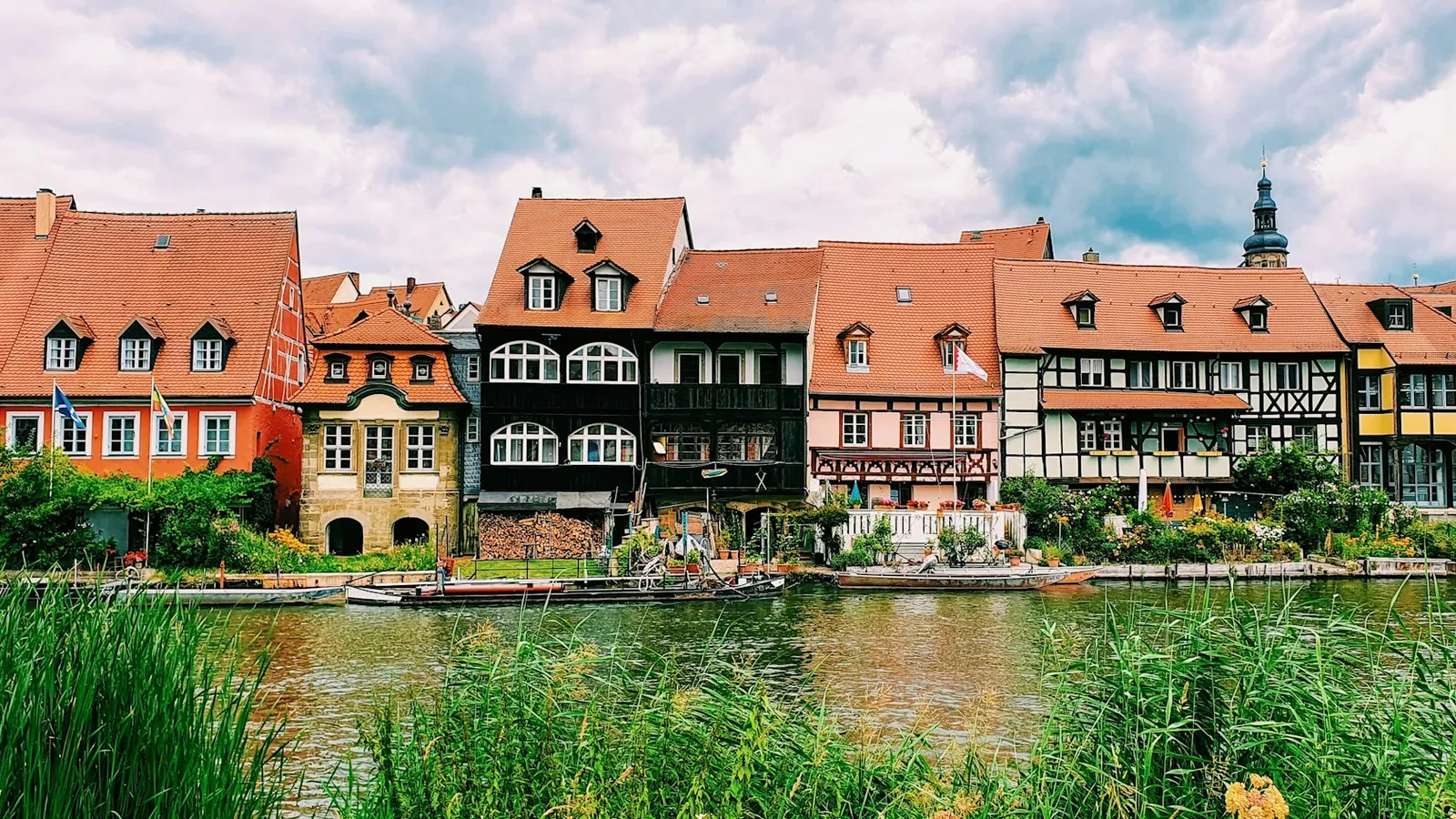
The World Heritage city of Bamberg, the Wagner Festival and the Margravial Opera House in Bayreuth, Veste Coburg fortress, the Plassenburg in Kulmbach: culturally, Upper Franconia has a lot to offer. On top of this come hiking and winter sports in the Fichtelgebirge, climbing in Franconian Switzerland, cycle paths along the Main and the Saale – and the highest density of breweries in the world.
Transport and Connections
The A9 links Upper Franconia with Nuremberg, Munich, Leipzig and Berlin, the A70 and A73 with Würzburg, Bamberg and Thuringia, the A72 with Chemnitz and Dresden, and the A93 with Regensburg and the Czech Republic. Regional trains connect the regional centres with Nuremberg; Nuremberg and Leipzig airports can be reached in one to two hours.
Who the Move Is Worthwhile For
- Families looking for a home of their own with a garden
- Skilled workers and managers in medium-sized businesses
- People working from home who value nature and peace and quiet
- Returners who want to come back to their home region
- Retirees who want to live affordably and close to nature
The Towns in Profile
| Town | Character | Good for |
|---|---|---|
| Bamberg | World Heritage old town, university, lively pub and brewery culture | Academics, culture lovers, investors |
| Bayreuth | Festival city, university, hospital, public authorities | Families, skilled workers, students |
| Coburg | Former royal residence with its fortress, insurance companies, university of applied sciences | Skilled workers in the service sector |
| Hof | Border town on the A9/A72/A93, university of applied sciences, industry | Commuters towards Saxony and the Czech Republic, the price-conscious |
| Kulmbach | Plassenburg, food industry, university campus | Families, skilled workers |
| Kronach | Historic old town, gateway to the Frankenwald | Nature lovers, families |
| Lichtenfels | Basket-weaving town on the Upper Main, railway hub | Commuters to Bamberg and Coburg |
| Forchheim | Half-timbered buildings, close to Erlangen and Nuremberg | Commuters into the metropolitan region |
| Marktredwitz and Wunsiedel | Fichtelgebirge, Luisenburg Festival | Peace and quiet, nature, affordable ownership |
| Selb | Porcelain town on the Czech border | Industrial skilled workers, yield-focused investors |
All 39 places where we are active can be found in the locations overview.
What Life Costs: a Comparison
An example calculation for a family of four who want to buy a 130 m² detached house. The figures are rounded guide values, not official statistics:
| Greater Munich | Bayreuth | Rural Upper Franconia | |
|---|---|---|---|
| Purchase price of a detached house (existing) | €900,000 – 1,300,000 | €380,000 – 520,000 | €180,000 – 300,000 |
| Monthly loan repayment with 20% equity (approx.) | €3,600 – 5,200 | €1,500 – 2,100 | €700 – 1,200 |
| Nursery place | depends on the municipality | depends on the municipality | depends on the municipality |
| Commuting time to work | often 45–60 minutes | 10–25 minutes | 15–40 minutes |
The biggest difference lies in housing costs. What a family in Munich spends on the loan repayment alone is often enough in Upper Franconia for a house, a car and savings combined. How much house you can afford is shown in the financing guide.
Health and Services
The regional centres have large hospitals – for example in Bayreuth, Bamberg, Coburg and Hof – with specialist departments up to the highest level of care. In the districts there are district hospitals and a network of GPs and specialists, although provision becomes thinner in rural areas. Anyone searching specifically should factor in the distance to the nearest hospital and GP practice when choosing a location – especially in old age. Medical centres and practice premises are, incidentally, also a sought-after segment for investors, see Office and practice premises.
Working from Home and Internet
For people who work wholly or partly from home, Upper Franconia is attractive – provided the internet connection is good. The roll-out of fibre has increased significantly in recent years thanks to federal and state funding programmes, but is not yet complete everywhere. Before buying, check the available bandwidth at the specific address. In many new-build areas, fibre is now standard.
Climate and Seasons
Upper Franconia has a more continental climate than the south of Bavaria. In the higher parts of the Fichtelgebirge and the Frankenwald, winters are long and snowy – good for cross-country skiing and skiing on the Ochsenkopf, but also a factor in heating costs and winter maintenance. In the Main Valley around Bamberg and Lichtenfels, it is noticeably milder. When choosing a house, it is worth looking at altitude, orientation and heating – see Heating Act (GEG).
Moving to Upper Franconia: the Practical Checklist
- Decide on the location: commute to work, school, nursery, doctors, rail connection.
- Clarify your budget: financing framework including additional costs, see Additional purchase costs in Bavaria.
- Rent first, then buy? For newcomers who do not yet know the region, a year of renting can make sense.
- Combine viewing days: several properties in one weekend, with video viewings beforehand if you wish.
- Check funding: for families and for buying older houses, see Funding programmes.
- Register: within two weeks of moving in, at the residents' registration office (Einwohnermeldeamt).
For the purchase process itself, the guide How a property purchase works helps.
Families in Upper Franconia: Nursery, School, Leisure
For families, Upper Franconia offers much of what is scarce in metropolitan areas: space, nature and short distances. A few points for orientation:
- Childcare: the provision of nursery places has improved in recent years, but varies from municipality to municipality. Ask your preferred municipality early.
- Schools: all types of school are represented in the regional centres and many medium-sized towns, plus specialised upper secondary schools (Fachoberschulen), vocational schools and universities.
- Leisure: swimming in lakes and outdoor pools, hiking and cycling, winter sports in the Fichtelgebirge, climbing halls, sports clubs in almost every village.
- Getting around: many children can walk or cycle to school; in the countryside the school bus takes over.
For families looking for a house, it is worth looking at new building areas and older houses in village centres – often with funding. → Funding programmes
Upper Franconia for Investors
The region also has arguments for investors: purchase prices below the Bavarian average, solid rental demand in the university and industrial towns, and gross yields that are no longer achievable in many major cities. At the same time, the region is diverse – an apartment in Bamberg and an apartment building in the Frankenwald are worlds apart. An overview by location is provided in the Upper Franconia market report, and background on strategies on the Investment page.
Returners: Back to the Home Region
Many who moved away for training or work come back later – often with a family and the wish for a house of their own. They know the region, have family nearby and know what they value about Upper Franconia. For returners, the following are particularly interesting:
- Working-from-home arrangements that make it possible to work for employers in Munich or Nuremberg and live in Upper Franconia.
- The parental home, which can be taken over or converted – often on favourable tax terms. → Gifting a property
- Regional employers that actively recruit returners.
We support returners with video viewings and appointments combined into a single weekend.
Frequently asked questions
What is the weather like in Upper Franconia?
Summers are warm and winters cooler than in the south of Bavaria, with plenty of snow at higher altitudes. In the Main Valley around Bamberg and Lichtenfels it is milder. Overall, the region has distinct seasons.
Is Upper Franconia also attractive for young people?
Yes, especially the university towns of Bamberg, Bayreuth, Coburg and Hof with their student life, culture and leisure facilities. On top of this come good career opportunities in medium-sized businesses and affordable housing.
What is the job market like in Upper Franconia?
In many parts of Upper Franconia, the unemployment rate is below the national average. There is particular demand for skilled workers in industry, the trades, nursing and care, IT and logistics. Many medium-sized companies offer attractive jobs, including for newcomers.
Can you live well in Upper Franconia without speaking German?
In the university towns and at internationally oriented employers, English is widespread. For everyday life, dealing with authorities and buying property, however, German skills are very helpful. At the notary appointment, an interpreter is mandatory if a buyer does not speak sufficient German. → International buyers
Do I need a car in Upper Franconia?
In the towns of Bamberg, Bayreuth, Coburg and Hof, you can get around well by bus, bike and train. In the countryside, a car is usually indispensable because buses run less frequently. Many municipalities now offer on-demand buses or similar services.
Is Upper Franconia also suitable for retirees?
Yes, especially the towns with good medical care and short distances. Barrier-free apartments in central locations are in demand, see Accessible living. Anyone who wants to swap a large house for an apartment will find information under Equity release.
Which town in Upper Franconia is the most popular?
Bamberg and Bayreuth are particularly sought after – with correspondingly higher prices. Hof, Kulmbach, Coburg and the medium-sized towns offer a good balance of price and infrastructure. A direct comparison can be found under Hof or Bayreuth?.
How does FrankenImmo help newcomers?
We advise on locations, schools and infrastructure, organise viewing days – including by video – and show suitable properties, often before they are publicly advertised.
Sources & further reading
- oberfranken.de – Upper Franconia region – location information
- statistik.bayern.de – Bavarian State Office for Statistics
- bezirk-oberfranken.de – District of Upper Franconia – culture, social affairs and regional development
- bamberg.info – Bamberg – World Heritage city
- bayreuth-tourismus.de – Bayreuth – city of the Festival
- fichtelgebirge.bayern – Fichtelgebirge tourist board
- frankenwald-tourismus.de – Frankenwald tourism
Unsure about a term? Property glossary · FAQ
Matching listings
What is your property worth today?
A market-based valuation using real comparable sales from Upper Franconia – free, without obligation, usually within 48 hours.
- One personal contact for all of Upper Franconia
- Reply usually within 24 hours