Property FinancingEquity, Loans and Subsidies
Financing is the foundation of every property purchase. Set it up properly and you buy safely and sustainably. Make mistakes and you risk over-indebtedness or miss out on favourable terms. This guide explains the essential building blocks.

This guide in one minute
The key points of this guide as a short video. All details and worked examples are in the text below.
No narration, background music only.
Inhalt dieser Seite (13)
- How Much Equity Do You Need?
- Loan Types at a Glance
- Fixed-Rate Period and Repayment
- Making Use of Subsidies
- Typical Financing Mistakes
- The Underestimated Risk: Follow-Up Financing
- What the Bank Checks
- Comparing Offers Properly
- Financing for Investors
- How Financing Works Step by Step
- Special Cases in Financing
- Planning the Monthly Burden Realistically
- Combining Financing and Renovation
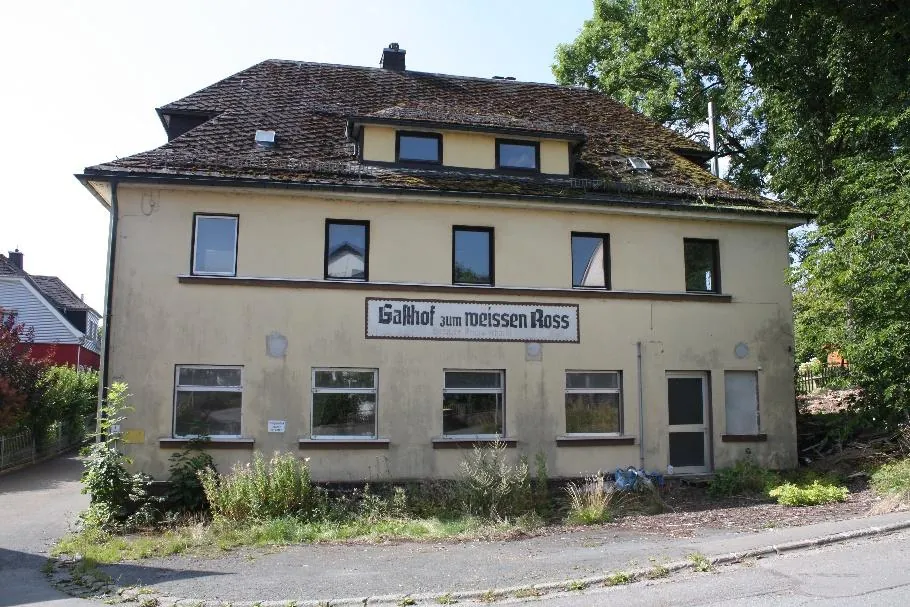
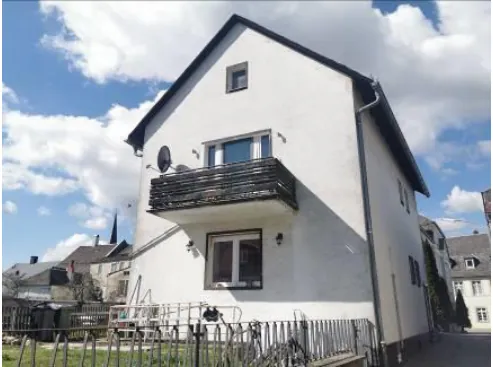
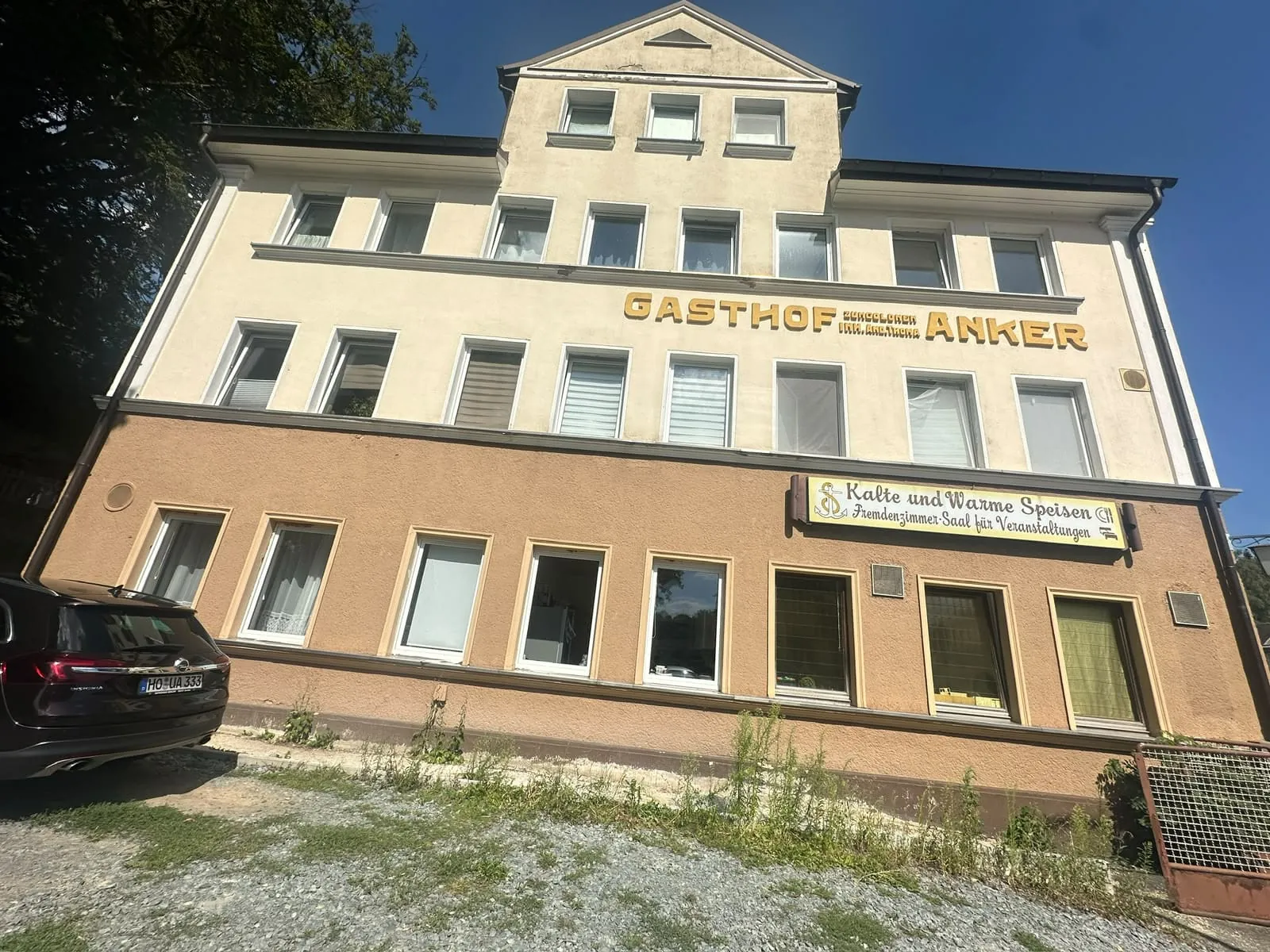
Currently for sale: See 3 houses and buildings from €130,000
Key points at a glance
- Equity should cover at least the incidental purchase costs; with 20–30% equity the terms become considerably better.
- An initial repayment rate of at least 2% makes sense – at 1% repayment takes more than 40 years.
- The biggest risk lies in follow-up financing: rising interest rates can increase the instalment significantly once the fixed-rate period ends.
- Compare offers by the effective annual interest rate and check special repayment rights and commitment fees.
- Subsidised loans from KfW and BayernLabo can supplement the financing; apply before signing the contract.
How Much Equity Do You Need?
Rule of thumb: At least the incidental purchase costs (approx. 7–9% in Bavaria) plus 10–20% of the purchase price. The more equity, the better the loan terms.
Example (purchase price €200,000 in Upper Franconia):
| Item | Amount |
|---|---|
| Purchase price | €200,000 |
| Land transfer tax (Grunderwerbsteuer, 3.5%) | €7,000 |
| Notary + land register (approx. 2%) | €4,000 |
| Estate agent's commission (buyer's share) | 3.57% if applicable |
| Recommended equity (20% + incidental costs) | approx. €51,000–58,000 |
| Loan required | approx. €160,000 |
Loan Types at a Glance
Annuity loan (Annuitätendarlehen)
The classic: a constant monthly instalment made up of interest and repayment. At the beginning the interest share is high; over time the repayment share increases. Typical fixed-rate periods: 10, 15 or 20 years.
KfW loan
The Kreditanstalt für Wiederaufbau (KfW) offers low-interest loans for energy-efficient properties and renovations. KfW loans can be combined with the bank loan. Current programmes: kfw.de.
Building savings contract (Bausparvertrag)
A combination of a savings phase and a loan phase. It secures a fixed loan interest rate for the future. Potentially useful when interest rates are rising, but complex and with a long lead time.
Fixed-Rate Period and Repayment
Fixed-rate period (Zinsbindung): The period during which the interest rate is fixed. The longer it is, the more predictable – but also slightly more expensive. When rates are low, a long fixed period (15–20 years) is worthwhile. When rates are high, a shorter fixed period with the option of cheaper follow-up financing can make sense.
Repayment rate (Tilgungssatz): Determines how quickly the loan is repaid. An initial repayment rate of at least 2% is recommended. At 1% repayment, paying off the loan takes more than 40 years.
| Interest rate | Repayment | Monthly instalment (€200,000) | Outstanding balance after 15 years |
|---|---|---|---|
| 3.5% | 2% | €917 | approx. €121,000 |
| 3.5% | 3% | €1,083 | approx. €82,000 |
| 3.5% | 4% | €1,250 | approx. €42,000 |
At 3.5% interest, full repayment takes around 43 years with 1% repayment, around 29 years with 2% and around 22 years with 3%.
Making Use of Subsidies
KfW programmes: Low-interest loans and repayment grants for energy-efficient new builds and renovations. → kfw.de
BAFA and KfW grants: BAFA subsidises individual energy-saving measures on the building envelope, KfW subsidises the replacement of heating systems. → bafa.de
BayernLabo: The Free State of Bavaria supports owner-occupied homes with low-interest loans, depending on income and household size. The former Bavarian home ownership grant (Bayerische Eigenheimzulage) is no longer granted to new applicants. → BayernLabo
A detailed overview is provided in the guide Subsidy programmes for purchase and renovation.
Wohn-Riester: Riester pension subsidies used to repay a property loan. Particularly interesting for families with children.
Principle: Subsidies generally have to be applied for before the purchase.
Typical Financing Mistakes
Setting the instalment too high: Build in a buffer for maintenance, running costs, changes in income and higher interest rates on follow-up financing.
Forgetting incidental costs: The incidental purchase costs of 7–9% have to be financed from equity – banks do not lend against them.
Too short a fixed-rate period: When interest rates are moderate, a long fixed-rate period ensures predictability. Follow-up financing at higher rates can increase the monthly instalment drastically.
No comparison: Obtain at least three financing offers. For the same term, the interest rate differences between banks can amount to several thousand euros.
→ Independent advice: Verbraucherzentrale Bayern
The Underestimated Risk: Follow-Up Financing
When the fixed-rate period ends, a large part of the loan is usually still outstanding. Nobody knows today at what interest rate it will continue. An example: loan €300,000, 3.8% interest, 2% repayment, instalment €1,450, fixed-rate period ten years.
| Interest rate on follow-up financing | Outstanding balance after 10 years | Instalment for repayment over a further 19 years |
|---|---|---|
| 3.0% | approx. €227,000 | approx. €1,310 |
| 4.5% | approx. €227,000 | approx. €1,480 |
| 5.8% | approx. €227,000 | approx. €1,650 |
Just two percentage points more mean €200 more per month. Anyone who could not afford that should choose a longer fixed-rate period or repay faster. From about three years before expiry, a forward loan (Forward-Darlehen) can lock in the interest rate for the follow-up financing – at a surcharge.
Good to know: ten years after full disbursement, you can terminate any fixed-rate loan with six months' notice, without an early repayment penalty (§ 489 BGB). A fixed-rate period of 15 or 20 years therefore gives you security without tying you down indefinitely.
What the Bank Checks
| Criterion | What it means |
|---|---|
| Income | Level and stability, permanent employment; for the self-employed, the annual accounts of the last two to three years |
| Household budget | What remains after all expenses; rule of thumb: instalment at most 35–40% of net income |
| Equity | at least the incidental costs, preferably an additional 20% of the purchase price |
| Creditworthiness | SCHUFA credit report, existing loans and leasing contracts |
| Lending value (Beleihungswert) | the value of the property that can be achieved over the long term, usually below the purchase price |
| Property documents | Land register, floor plans, living area, energy certificate, photos, building specification |
The more complete your documents, the faster the loan approval – and the stronger your position towards the seller. The documents you need for the property are listed in the checklist for buyers.
Comparing Offers Properly
Do not compare loan offers by the nominal interest rate alone:
- Effective annual interest rate: includes all costs and is the only comparable figure.
- Special repayment right: Usually 5 to 10% of the loan amount per year free of charge – important if you expect bonus payments or inheritances.
- Change of repayment rate: The option to adjust the repayment rate during the term.
- Commitment fees (Bereitstellungszinsen): Charged if the loan is not drawn down – important for new builds and renovations. Make sure the commitment-fee-free period is long enough.
- Loan-to-value ratio (Beleihungsauslauf): With a higher loan share, interest rates rise in steps. Sometimes it pays to contribute a few thousand euros more equity to reach a cheaper tier.
Financing for Investors
Anyone who lets a property calculates differently from an owner-occupier:
- Interest on debt is a deductible expense (Werbungskosten) and reduces the tax on rental income. That is why many investors deliberately use less equity.
- A lower repayment rate increases cash flow but extends the term and the interest rate risk.
- The bank includes the rent in its assessment: Usually 60 to 70% of rental income is counted as income.
- Several properties: From the second or third property onwards, it pays to plan the financing strategically and not to link collateral unnecessarily.
How interest, repayment and tax affect returns is shown in the guides Calculating rental yield and Depreciation (AfA) on property.
How Financing Works Step by Step
| Step | Timing |
|---|---|
| Household budget and budget | before the search |
| Financing confirmation | before viewings |
| Obtain concrete offers | after agreement with the seller |
| Sign the loan agreement | before the notary appointment |
| Register the land charge (Grundschuld) | at or shortly after the notary appointment |
| Payment to the seller | after the notary's notice of maturity |
We work with independent financing partners from the region – find out more under financing brokerage. The entire purchase process is described in How a property purchase works.
Special Cases in Financing
Self-employed buyers: Banks usually require the annual accounts and tax assessments of the last two to three years and work with an average income. Fluctuating profits lead to deductions. Good preparation and an adviser who knows the self-employed are particularly important here.
Unmarried couples: Both can finance together and become joint owners. In the land register, the shares should correspond to the equity contributed; a partnership agreement regulates what happens in the event of a separation.
Older buyers: Financing is possible even at 60 or 70 if repayment remains affordable into old age or there is sufficient equity. Banks then pay particular attention to pensions and assets.
Bridging when selling: Anyone who buys a new house first and then sells the old one needs interim financing. This is more expensive and riskier; it is better to coordinate the sale and purchase carefully in time.
Planning the Monthly Burden Realistically
In addition to the loan instalment, there are further monthly costs in your own house. An example for a detached house of 140 m²:
| Item | per month (approx.) |
|---|---|
| Loan instalment | €1,450 |
| Heating and hot water | €150–250 |
| Electricity | €80–120 |
| Water, sewage, waste | €50–80 |
| Property tax (Grundsteuer) and insurance | €60–100 |
| Maintenance reserve (1% of the building value per year) | €200–300 |
| Total burden | around €2,000–2,300 |
Many buyers only count the loan instalment and underestimate the other costs. Anyone who consistently saves the maintenance reserve is prepared for a new roof or a new heating system. More on running costs under Incidental purchase costs in Bavaria.
Combining Financing and Renovation
Anyone who buys and renovates an older house should finance both together. Banks then assess the value after renovation, and subsidised loans for energy-efficient renovation can be included. Important: the renovation costs must be estimated realistically, ideally with tradesmen's quotes and a renovation roadmap. Additional financing during the construction phase is more expensive and more difficult. Background under Buying an older building and Subsidy programmes.
FrankenImmo – Results-driven brokerage
Phone: 0151 58363197 | Financing brokerage
Frequently asked questions
Is a building savings contract still worthwhile today?
For young families with a longer planning horizon, it can provide interest rate security for the future. It is usually not suitable for a short-term purchase, because the savings phase takes years.
Do I need an independent financing adviser?
Not necessarily, but they compare offers from many banks and know the subsidy programmes. Your own bank may make a good offer, but only compares its own products. Obtaining at least three offers is worthwhile in any case.
What happens if I can no longer pay the instalment?
Talk to your bank early. Repayment holidays, an extension of the term or a lower repayment rate are often possible. If you only react when reminders arrive, you have fewer options. In the worst case, an orderly sale is better than a forced auction (Zwangsversteigerung).
How long should the fixed-rate period be?
That depends on your appetite for risk and your plans. Anyone who needs a fixed instalment over many years – for example a young family on one income – is well advised to choose 15 to 20 years. Anyone who intends to sell in the foreseeable future or make large special repayments can fix for a shorter period.
Which is better: more equity or keeping money as a reserve?
Both are important. Contribute enough equity to reach a good interest rate tier, but keep a reserve of at least three to six months' net income for repairs and unexpected expenses. Anyone who puts everything into the purchase will have to finance the first broken heating system with an expensive consumer loan.
Can I finance the incidental purchase costs as well?
Some banks finance up to 110% of the purchase price, i.e. including incidental costs. This is more expensive and only possible with very good creditworthiness. More under Incidental purchase costs in Bavaria.
Sources & further reading
- bundesbank.de – Deutsche Bundesbank – interest rate statistics for housing loans
- gesetze-im-internet.de – § 489 BGB – right of termination after ten years
- verbraucherzentrale-bayern.de – Verbraucherzentrale Bayern – independent mortgage advice
- bayernlabo.de – BayernLabo – housing subsidies in Bavaria
Unsure about a term? Property glossary · FAQ
Matching listings
What is your property worth today?
A market-based valuation using real comparable sales from Upper Franconia – free, without obligation, usually within 48 hours.
- One personal contact for all of Upper Franconia
- Reply usually within 24 hours