Calculating rental yieldhow property investors get the numbers right
"Seven per cent yield" appears in many property brochures. But which yield is meant? Gross, net, before or after financing? Anyone who wants to compare properties needs to know the key figures – and which costs belong in the calculation.
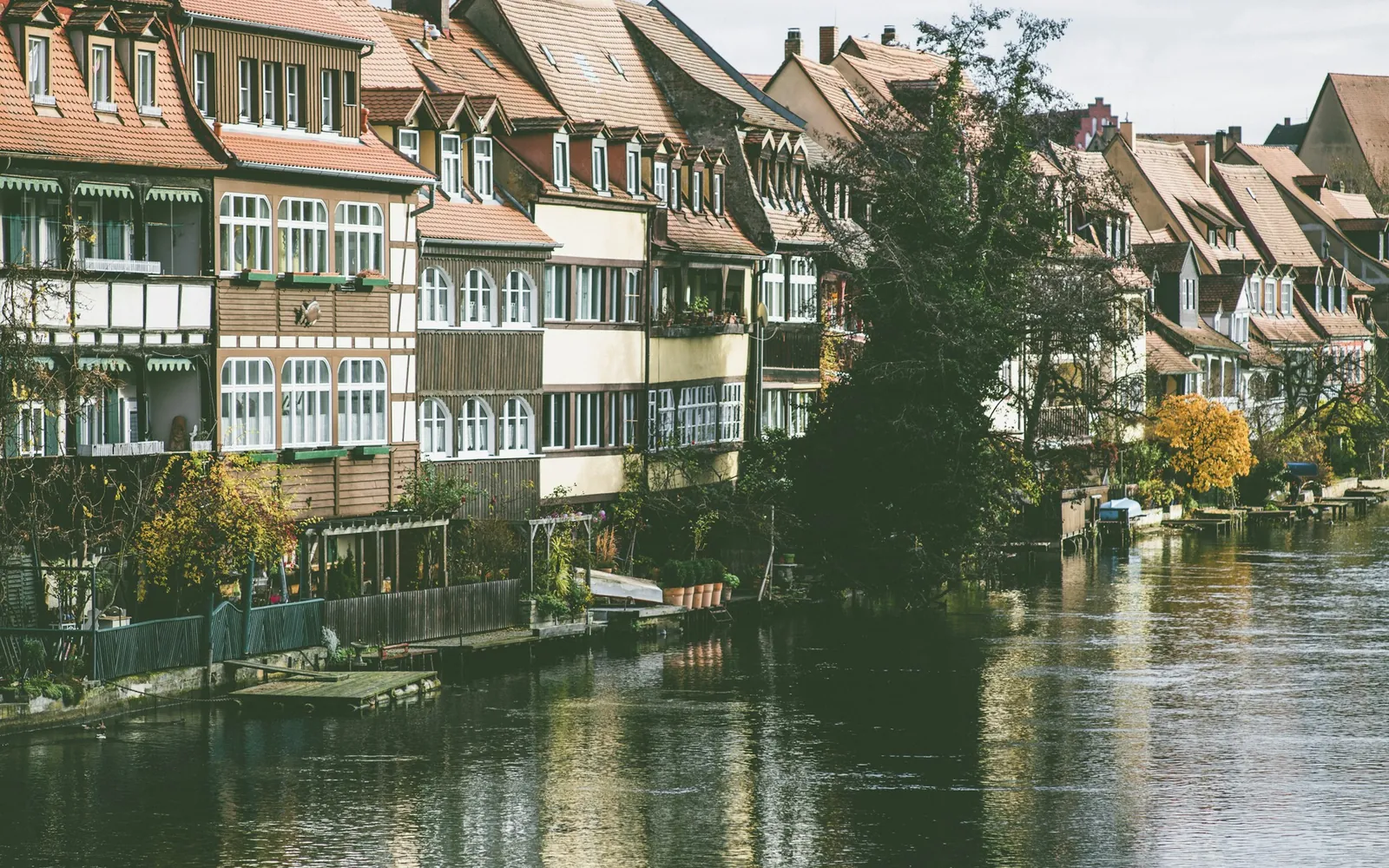
This guide in one minute
The key points of this guide as a short video. All details and worked examples are in the text below.
No narration, background music only.
Inhalt dieser Seite (15)
- Gross rental yield
- The price-to-rent multiple
- Net rental yield
- Return on equity
- Don't forget cash flow
- Rules of thumb for Oberfranken
- Second example: apartment building in Selb with positive leverage
- Tax changes the calculation
- Think over ten years
- Sensitivity: what happens if …
- The key figures at a glance
- Check the location before you calculate
- Typical calculation mistakes
- Yield and risk in Oberfranken
- Rental yield for furnished letting
Currently for sale: See 2 investment properties from €100,000
Key points at a glance
- Gross rental yield = annual net cold rent ÷ purchase price × 100; it is only useful for a quick comparison.
- Net rental yield takes purchase costs and non-recoverable running costs into account – it is usually 1 to 1.5 percentage points lower.
- The price-to-rent multiple (purchase price ÷ annual rent) is often 13–20 in Oberfranken and over 30 in Munich.
- Return on equity shows how your invested capital performs – with borrowing it can be higher or lower than the property's own yield.
- Reserves for maintenance and loss of rent belong in every serious calculation.
Gross rental yield
Formula: annual net cold rent (Jahresnettokaltmiete) ÷ purchase price × 100
Example: a freehold flat in Hof, 70 m², purchase price €140,000, cold rent €490 per month (€7.00/m²).
Annual rent: €490 × 12 = €5,880
Gross rental yield: 5,880 ÷ 140,000 × 100 = 4.2%
The gross yield is quick to calculate and good for a first comparison – nothing more.
The price-to-rent multiple
Formula: purchase price ÷ annual net cold rent
In the example: 140,000 ÷ 5,880 = 23.8. The multiple (Kaufpreisfaktor) tells you how many years' rent the purchase price corresponds to. In Oberfranken, typical multiples for apartment buildings are between 13 and 20, and somewhat higher for freehold flats in good locations. In Munich and Frankfurt, multiples above 30 are common.
Net rental yield
Formula: (annual net cold rent − non-recoverable costs) ÷ (purchase price + purchase costs) × 100
Non-recoverable costs are mainly management, maintenance and the risk of rent loss.
Continuing the example:
| Item | Amount |
|---|---|
| Annual net cold rent | €5,880 |
| − Management (owners' association and unit management) | − €480 |
| − Maintenance (reserve + private unit, €12/m²) | − €840 |
| − Allowance for rent loss (2%) | − €118 |
| = Net operating income | €4,442 |
| Purchase price + purchase costs (approx. 9%) | €152,600 |
| Net rental yield | 2.9% |
Here the net yield is 1.3 percentage points below the gross yield – which is typical.
Return on equity
Borrowing changes the picture. Suppose you finance €120,000 at 3.6% interest and put in €32,600 of equity:
| Item | Amount |
|---|---|
| Net operating income | €4,442 |
| − Interest in the first year (3.6% of €120,000) | − €4,320 |
| = Surplus before tax and repayment | €122 |
| Return on equity (122 ÷ 32,600) | 0.4% |
If the loan interest rate is higher than the property's yield, financing pushes down the return on equity (negative leverage). Only rent increases, repayment, value growth and tax effects (depreciation, AfA) make the investment attractive. That is why higher starting yields – such as apartment buildings in Oberfranken often offer – are crucial for financed investments.
Don't forget cash flow
Besides the yield, cash flow counts: net operating income minus interest and repayment. A negative cash flow has to be covered from your ongoing income. For tax purposes, interest and depreciation count as deductible expenses (Werbungskosten) – see Depreciation on property.
Rules of thumb for Oberfranken
- Gross yields below 4% are usually only worthwhile in very good locations with potential for value growth.
- Apartment buildings with a gross yield of 5.5 to 7.5% are realistic in Hof, Kulmbach, Marktredwitz or Selb – provided the condition and tenant structure are checked carefully.
- Very high yields (over 9%) almost always point to risks: vacancy, a maintenance backlog, a weak location.
Second example: apartment building in Selb with positive leverage
An apartment building with eight flats, built in 1958, new roof and new heating in 2015, 520 m² of living space, purchase price €480,000, net cold rent €6.20/m².
| Item | Amount |
|---|---|
| Annual net cold rent (520 m² × €6.20 × 12) | €38,688 |
| Gross rental yield | 8.1% |
| Price-to-rent multiple | 12.4 |
| − Management (8 × €300) | − €2,400 |
| − Maintenance (€14/m²) | − €7,280 |
| − Allowance for rent loss (3%) | − €1,161 |
| − Non-recoverable service charges, vacancy costs | − €800 |
| = Net operating income | €27,047 |
| Total investment (incl. 9% purchase costs) | €523,200 |
| Net rental yield | 5.2% |
| Loan of €400,000 at 3.8%, interest in the first year | − €15,200 |
| Surplus before tax and repayment | €11,847 |
| Equity | €123,200 |
| Return on equity before repayment and tax | 9.6% |
Here the property's yield is above the loan interest rate – the leverage works positively. The price for this: higher risk in case of vacancy, an older building, and a location with weaker population trends than Bamberg or Bayreuth. Exactly this trade-off belongs in every decision. You will find suitable properties under Apartment buildings and Income properties.
Tax changes the calculation
Rental income is subject to income tax – but interest, depreciation (AfA) and running costs are deducted. For the apartment building in Selb, assuming an 80% building share and 2% depreciation:
| Item | Amount |
|---|---|
| Rental income | €38,688 |
| − Running costs (excluding reserve, actual expenses only, example) | − €6,500 |
| − Loan interest | − €15,200 |
| − Depreciation (2% of €418,560 building share incl. proportional purchase costs) | − €8,371 |
| = Taxable surplus | €8,617 |
At a personal tax rate of 35%, around €3,000 of income tax is due. Because depreciation is not an actual outgoing, the real cash inflow stays higher than the taxable profit. Details in the guides Depreciation on property and Tax-efficient investment.
Think over ten years
Returns do not come from the ongoing rent alone. A simple ten-year view for the flat in Hof from the first example:
| Factor | Assumption | Effect after 10 years |
|---|---|---|
| Rent increase | 1.5% per year | Rent rises from €490 to around €570 |
| Repayment | 2% initially | Outstanding debt falls by around €28,000 |
| Value growth | 1% per year | Value rises by around €15,000 |
| Maintenance | higher reserve from year 6 | Net operating income grows more slowly than the rent |
Even an investment with a low starting yield can build wealth over time in this way – provided the location and lettability are right. At the same time, value growth is not guaranteed. In parts of Oberfranken with a falling population, you should not count on it. Data on this in the market report Demographics.
Sensitivity: what happens if …
A serious calculation tests how robust the investment is. For the apartment building in Selb:
| Scenario | Surplus before repayment and tax |
|---|---|
| Base case | €11,847 |
| Interest on follow-up financing + 1.5 percentage points | around €5,800 |
| One flat empty for twelve months | around €7,000 |
| Unexpected renovation of €30,000 (reserve not sufficient) | negative once |
| Rent + €0.50/m² after modernisation | around €15,000 |
If the unfavourable scenarios would not put you in difficulty, you have planned soundly. Also check the local rent index (Mietspiegel) before factoring in rent increases – see Rent index Oberfranken and Rent increases.
The key figures at a glance
| Figure | Formula | What it is good for |
|---|---|---|
| Gross rental yield | annual cold rent ÷ purchase price | quick comparison |
| Price-to-rent multiple | purchase price ÷ annual cold rent | price level of a location |
| Net rental yield | net operating income ÷ total investment | the property's actual yield |
| Cash flow | net operating income − interest − repayment | liquidity, monthly burden |
| Return on equity | surplus ÷ equity | return on the money you put in |
Check the location before you calculate
The best yield calculation is of little use if the location is wrong. Before every investment, check:
| Factor | positive | negative |
|---|---|---|
| Population | stable or growing | declining for years |
| Employers | university, hospital, large mid-sized company nearby | few, one-sided employers |
| Infrastructure | supermarket, doctors, public transport within walking distance | long distances, poor connections |
| Flat size | matches demand (e.g. 2 rooms near the university) | very large flats in areas with small households |
| Condition of the building | adequate reserve, roof and heating in good shape | maintenance backlog, low reserve |
The market report Demographics provides population data, and the Rent index Oberfranken provides rent levels.
Typical calculation mistakes
- Asking rent instead of actual rent: the calculation uses the rent in the brochure that can supposedly be achieved on re-letting – not the actual contractual rent.
- Treating the entire service charge (Hausgeld) as tenant costs: management and the reserve are paid by the owner.
- No maintenance for the private unit: the bathroom, floors and kitchen age too.
- Ignoring vacancy: even good flats stand empty for a few weeks when tenants change.
- Forgetting the purchase costs: they increase the total investment by up to 9%.
- Counting tax as a blanket positive: depreciation helps, but taxable surpluses also cost tax.
Yield and risk in Oberfranken
| Property type | typical gross yield | risk profile |
|---|---|---|
| Studio flat near the university (Bamberg, Bayreuth) | 3.5–4.5% | low, high turnover |
| Family flat in a regional centre | 3.5–5.0% | low to medium |
| Apartment building in Hof, Kulmbach, Selb | 5.5–7.5% | medium, depending on condition and location |
| Apartment building in a rural area | 7.0–9.0% | higher, vacancy and resale risk |
| Medical centre with long leases | 5.0–6.5% | low to medium, depending on tenant creditworthiness |
A balanced strategy often combines stable properties in the university towns with higher-yielding buildings in mid-sized towns. For commercial property see Valuing commercial property, for strategies Portfolio.
Rental yield for furnished letting
Furnished flats – for students, commuters or project staff, for instance – achieve higher rents. However, the calculation must account for additional costs: furnishings, faster wear and tear, more frequent tenant changes, cleaning and more management effort. The furnishings are depreciated for tax purposes over their useful life. In Bamberg and Bayreuth this can pay off; in locations with little demand for furnished housing, less so.
Frequently asked questions
Is a rental yield of 3% considered bad?
Not necessarily. In very stable locations with a low vacancy risk and good prospects for value growth, a lower yield can be appropriate. What matters is the balance between yield, risk and your financing.
How do I calculate the yield of a freehold flat with a high service charge?
First deduct from the service charge (Hausgeld) the recoverable part that the tenant pays through the service charge advance. Only the remainder – mainly management and the maintenance reserve – reduces your yield. A high service charge is not automatically bad if it builds up a solid reserve.
How much equity should I put into an investment property?
At least the purchase costs, often 10 to 20% of the purchase price. Because loan interest is tax-deductible, many investors deliberately use less equity. What matters is that the cash flow remains manageable even when tenants change or interest rates rise.
Which is better: one expensive flat in Bamberg or two cheap ones in Hof?
That depends on your goals. Two flats spread the vacancy risk and deliver a higher ongoing yield, but involve more management effort. A flat in Bamberg is easier to manage and holds its value better, but brings less ongoing income.
How much should I allow for maintenance?
As a guide, €10 to €15 per square metre per year for older buildings, €7 to €10 for newer ones. For freehold flats, an amount for the private unit – bathroom, floors, kitchen – is added to the owners' association reserve. Anyone who calculates too tightly will be caught out by the first major repair.
Is a high gross yield always better?
No. A high gross yield is often the price of higher risk: a weaker location, an older building, lower tenant creditworthiness or foreseeable vacancy. Only compare yields between properties with similar risk.
What is a good rental yield?
That depends on the location, condition and risk. In Oberfranken, gross yields of 5 to 7% are considered good for solid properties; in university towns such as Bamberg or Bayreuth 4 to 5% is usual, but the risk is lower.
Does the service charge count as a cost?
Only the non-recoverable part (management, maintenance reserve). Operating costs such as heating, water and refuse collection are paid by the tenant through the service charge advance.
Can FrankenImmo assess income properties for me?
Yes. For properties from our portfolio, we prepare a profitability calculation with all key figures. Register your search profile with our Investor matching.
Sources & further reading
- gesetze-im-internet.de – ImmoWertV (Property Valuation Ordinance) – management costs and capitalisation rate
- gesetze-im-internet.de – Betriebskostenverordnung (Operating Costs Ordinance) – what may be passed on to tenants
- bundesbank.de – Deutsche Bundesbank – interest rate statistics for housing loans
- statistik.bayern.de – Bavarian State Office for Statistics – population and household projections
Unsure about a term? Property glossary · FAQ
What is your property worth today?
A market-based valuation using real comparable sales from Upper Franconia – free, without obligation, usually within 48 hours.
- One personal contact for all of Upper Franconia
- Reply usually within 24 hours