Energy-Efficient RenovationObligations, Costs and Funding
The energy-efficient renovation (energetische Sanierung) of existing properties is one of the central topics on the German property market. The Building Energy Act (Gebäudeenergiegesetz, GEG) defines minimum standards and retrofit obligations. Funding programmes from KfW and BAFA make renovations economically more attractive. And the market rewards energy-efficient properties with higher prices and faster letting.
This guide in one minute
The key points of this guide as a short video. All details and worked examples are in the text below.
No narration, background music only.
Inhalt dieser Seite (14)
- GEG Obligations on a Change of Ownership
- Typical Renovation Measures and Costs
- Funding: KfW, BAFA and Tax Relief
- Order of Renovation: What Comes First?
- Energy-Efficient Renovation as an Increase in Value
- Worked Example: Detached House from 1968 in Hof
- Energy Efficiency Classes at a Glance
- Why Doing Nothing Is Becoming More Expensive: the CO₂ Price
- Renovation in a Freehold Apartment
- Half-Timbered and Listed Buildings: Renovating Differently
- Renovate Before Selling?
- Renovation and Tenants: What Landlords Need to Consider
- Photovoltaics and Battery Storage
- Calculating Renovation Costs Correctly
Currently for sale: See 3 houses and buildings from €130,000
Key points at a glance
- New owners of detached and two-family houses must meet certain retrofit obligations under the GEG within two years.
- The right order saves money: building envelope first, then heating, ventilation last.
- Grants from BAFA and KfW, or alternatively the tax bonus under § 35c EStG, reduce costs considerably; apply before placing orders.
- An individual renovation roadmap (iSFP) shows the most sensible order and increases funding for individual measures.
- Energy efficiency is a price factor: houses in classes F to H are traded at a discount.
In Upper Franconia, where a large part of the residential building stock dates from the 1950s–1970s, the issue affects a particularly large number of owners. This guide explains what you need to know.
GEG Obligations on a Change of Ownership
When ownership changes, the Building Energy Act prescribes certain retrofit obligations that must be met within two years:
Obligation 1: Insulating the Top Floor Ceiling or the Roof
If the top floor ceiling does not meet the minimum requirements (U-value > 0.24 W/m²K), it must be insulated. Alternatively, the roof itself can be insulated. Costs: approx. €3,000–8,000 for insulating the top floor ceiling, €15,000–30,000 for roof insulation.
Obligation 2: Replacing Old Boilers
Boilers that are more than 30 years old and use neither low-temperature nor condensing technology must be replaced. Exceptions apply to owner-occupied detached and two-family houses that have been continuously occupied by the owner since 1 February 2002.
Obligation 3: Insulating Accessible Hot-Water Pipes
Pipes carrying hot water in unheated rooms (cellar, loft) must be insulated. A relatively inexpensive measure (€500–2,000) that noticeably improves energy efficiency.
Current information on the GEG is available from the Federal Ministry for Housing, Urban Development and Building.
Typical Renovation Measures and Costs
| Measure | Typical costs (detached house, 120 m²) | Energy saving |
|---|---|---|
| Façade insulation (ETICS) | €20,000–40,000 | 15–25% |
| Roof insulation | €15,000–30,000 | 10–20% |
| Window replacement (triple glazing) | €10,000–22,000 | 10–15% |
| Heating replacement (heat pump) | €15,000–30,000 | 30–50% |
| Cellar ceiling insulation | €3,000–8,000 | 5–10% |
| Ventilation system with heat recovery | €8,000–15,000 | 5–15% |
Actual savings depend on the initial condition, the building geometry and usage behaviour.
Funding: KfW, BAFA and Tax Relief
BAFA: Federal Funding for Efficient Buildings (BEG EM)
Individual measures on the building envelope (windows, façade, roof) and building services (heating, ventilation) are supported by BAFA with grants. For measures on the building envelope, the grant under the most recently applicable version is 15%, or 20% with a renovation roadmap. Since 2024, heating replacement has been funded through KfW, with up to 70%. For many measures, an energy efficiency expert must be involved. → bafa.de
KfW: Efficiency House Renovation
For a complete renovation to KfW Efficiency House (Effizienzhaus) standard, KfW offers low-interest loans and repayment grants. The higher the efficiency level achieved, the higher the funding. → kfw.de
Tax Relief (§ 35c EStG)
As an alternative to KfW/BAFA, owner-occupiers can claim energy-efficient renovation measures for tax purposes: 20% of the costs (max. €40,000 per property) are deducted from the tax liability over three years. It cannot be combined with KfW/BAFA.
Individual Renovation Roadmap (iSFP)
A qualified energy consultant prepares an individual renovation roadmap (individueller Sanierungsfahrplan, iSFP) that shows the most economically sensible order of measures. The energy consultation itself is subsidised by BAFA; the funding rate and maximum amount have recently been adjusted several times. And: anyone who implements measures from an iSFP receives a bonus of 5 percentage points on BAFA funding and can have higher costs funded. An overview of all programmes is given in the guide Funding programmes for purchase and renovation.
Order of Renovation: What Comes First?
The order is decisive for cost-effectiveness:
1. Building envelope first (roof, façade, windows, cellar ceiling) – reduces the heating demand.
2. Then heating – the new heating system is designed for the reduced demand and can be smaller (and cheaper).
3. Ventilation last – in heavily insulated buildings, controlled ventilation is important to avoid damp damage.
Energy-Efficient Renovation as an Increase in Value
The energy performance certificate (Energieausweis) is increasingly becoming a price factor on the property market. Properties with a good energy efficiency class (A+ to C) achieve higher sale prices and shorter marketing periods. Properties with poor efficiency (F–H) are traded at a discount – and the trend is rising.
In Upper Franconia, an energy-efficient renovation can increase the market value of an existing property by 15–30% while reducing ongoing energy costs by 40–60%.
→ Details on renovation properties: Properties in need of renovation
Worked Example: Detached House from 1968 in Hof
140 m² of living space, oil heating from 1996, wooden windows with double glazing from 1985, uninsulated roof. Heating oil consumption around 3,000 litres a year. Planned: insulate the top floor ceiling and the cellar ceiling, replace the windows, air-to-water heat pump.
| Item | Amount |
|---|---|
| Top floor ceiling insulation | €6,000 |
| Cellar ceiling insulation | €5,000 |
| New windows | €22,000 |
| Heat pump incl. replacing radiators in two rooms | €36,000 |
| Energy consultation with renovation roadmap | €1,500 |
| Total | €70,500 |
| − BAFA grant for the envelope (20% with iSFP on €33,000) | − €6,600 |
| − KfW grant for heating (e.g. 50% on €30,000 eligible costs) | − €15,000 |
| − Grant for energy consultation | pro rata |
| Own contribution | around €48,000 |
In this example, energy costs fall from around €3,300 (heating oil) to around €1,400 (heat pump electricity) a year. On top of this come a higher property value, independence from the oil price and the fulfilment of the GEG obligations. The figures are rounded example values; energy prices and funding conditions change.
Energy Efficiency Classes at a Glance
| Class | Final energy (kWh/m² per year) | Typical for |
|---|---|---|
| A+ / A | below 50 | new build, passive house |
| B | 50–75 | new build to current standard |
| C | 75–100 | well-renovated older building |
| D | 100–130 | partially renovated older building |
| E | 130–160 | existing stock from the 1980s onwards |
| F | 160–200 | unrenovated stock from the 1960s–1980s |
| G | 200–250 | unrenovated older building |
| H | above 250 | very old, uninsulated stock |
The class is shown on the energy performance certificate and in every property advertisement. How to read the certificate and which version you need is explained on the page Energy performance certificate.
Why Doing Nothing Is Becoming More Expensive: the CO₂ Price
Since 2021, a CO₂ price has been levied on heating oil and natural gas; it is rising step by step and is due to transfer into the European emissions trading system from 2027. For a house using 3,000 litres of heating oil a year, every increase of €10 per tonne of CO₂ means around €80 in extra costs per year. In let houses, landlords bear part of these costs themselves – the worse the building, the more – see Service charge statement.
Renovation in a Freehold Apartment
In apartment complexes, the owners' association decides on the façade, roof, windows (usually common property) and heating. Since the reform of the Condominium Act (WEG), a simple majority is generally sufficient for this. Costs are allocated according to co-ownership shares, often via the maintenance reserve and special levies. Individual owners can carry out measures within their own apartment, such as internal insulation or smart thermostats. More under Freehold apartments, owners' association (WEG) and service charges.
Half-Timbered and Listed Buildings: Renovating Differently
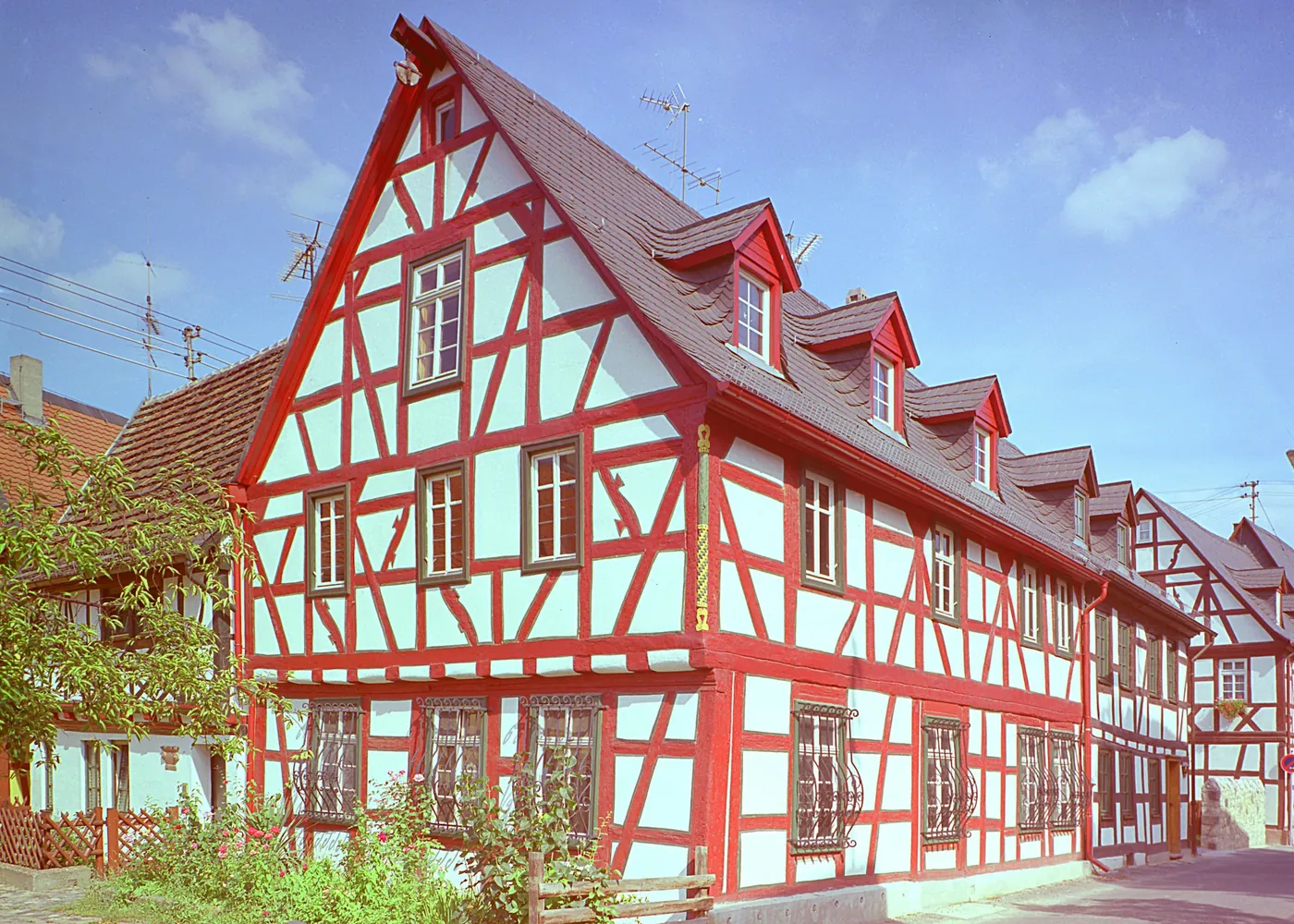
For half-timbered houses (Fachwerkhäuser) and listed buildings – not uncommon in Upper Franconia – standard solutions often do not fit. External insulation is usually ruled out, and internal insulation must be vapour-permeable so that the timber does not rot. Listed buildings benefit from relaxations under the GEG, but are subject to approval requirements under the Monument Protection Act (Denkmalschutzgesetz), and special depreciation allowances are available. More under Buying an older building.
Renovate Before Selling?
Sellers face the question of whether renovating before a sale pays off. Usually not in full: buyers rarely pay the full cost of a new heating system or new windows, and they often want to decide for themselves. A renovation roadmap with a cost estimate, which gives the buyer planning security, makes more sense. See Preparing a property for sale.
Renovation and Tenants: What Landlords Need to Consider
Anyone carrying out an energy-efficient renovation of a let property must involve the tenants at an early stage:
- Notice at least three months in advance in text form – stating the type, scope, start, expected duration and the expected rent increase.
- Duty to tolerate: tenants must in principle tolerate energy-efficient modernisations, but can invoke hardship.
- Rent reduction: for the first three months of an energy-efficient modernisation, a rent reduction because of construction work is excluded.
- Rent increase: 8% of the costs that can be passed on per year, subject to caps; special rules apply to heating systems.
- CO₂ costs: after the renovation, the share of CO₂ costs the landlord has to bear falls.
More under Rent increases and Tenancy law.
Photovoltaics and Battery Storage
A photovoltaic system is not an insulation measure, but it improves the energy balance and lowers electricity costs – especially in combination with a heat pump. Simplified tax rules apply to detached houses: small systems are exempt from income tax, and no VAT is charged on the purchase. For owners in Upper Franconia it is worth taking a look at their own roof, especially if it faces south, east or west. A battery storage system increases self-consumption, but does not pay off in every case.
Calculating Renovation Costs Correctly
Cost estimates from the internet are a start, but they do not replace quotations. For realistic planning:
- obtain at least two to three quotations per trade,
- plan a buffer of 10 to 20% for the unforeseen,
- do not forget ancillary costs such as scaffolding, disposal, painting work and planning,
- only factor in funding once approval has been granted,
- check which work you can do yourself – and which a specialist firm must confirm for the funding.
Anyone who buys a house and renovates it straight away should include the renovation in the financing. → Financing guide
FrankenImmo – Results-driven brokerage
Telephone: 0151 58363197 | Book an advice appointment
Frequently asked questions
Does a renovation increase the value of my property?
As a rule, yes, but rarely by the full amount of the investment. The increase in value is greater the worse the starting point was and the more sought-after the location is. On top of this come lower energy costs and better lettability.
Can I do the renovation myself and still receive funding?
In part. For some measures, material costs are funded even if you do the work yourself, provided a specialist firm or energy consultant confirms that it has been carried out properly. Check the conditions of the relevant programme in advance.
Do I have to renovate after buying?
Certain measures, yes – the GEG prescribes retrofit obligations on a change of ownership (roof insulation, heating replacement for boilers >30 years old, pipe insulation). Deadline: two years after acquisition.
Can I combine KfW and BAFA?
Not for the same measure. But different measures can be funded from different programmes (e.g. windows via BAFA, heating via KfW).
Is renovation economically worthwhile?
In most cases, yes – especially if funding is used. An individual renovation roadmap (iSFP) shows the most economically sensible approach.
Do I have to insulate my façade?
There is no general obligation to insulate the façade. However, if you renew more than 10% of the external render area, the minimum thermal insulation requirements of the GEG apply to that building component. Anyone who has to re-render anyway should therefore plan the insulation at the same time.
How long does an energy-efficient renovation take?
Individual measures such as replacing windows or insulating the top floor ceiling take a few days. A comprehensive renovation with heating replacement, windows and insulation often takes six to twelve months, including planning, funding applications and finding tradespeople. Allow plenty of lead time – good tradespeople in the region are often booked up months in advance.
Sources & further reading
- gesetze-im-internet.de – Building Energy Act (GEG)
- bafa.de – BAFA – Federal Funding for Efficient Buildings
- energie-effizienz-experten.de – List of energy efficiency experts
- verbraucherzentrale-energieberatung.de – Energy advice from the consumer advice centre
Unsure about a term? Property glossary · FAQ
Matching listings
What is your property worth today?
A market-based valuation using real comparable sales from Upper Franconia – free, without obligation, usually within 48 hours.
- One personal contact for all of Upper Franconia
- Reply usually within 24 hours